
I haven’t been posting as much due to work and prepping for exam cramming, but follow me on Twitter for some fitting room photos and more. I’ve fallen very behind on emails and comments but will try to respond to any questions soon. Thank you for your patience!
On to today’s post ~ I used to sew and gave up due to lack of patience and skill, but felt inspired to dust off my sewing machine again. Here’s a little something that I worked on recently:

When I initially tried on this blazer, I almost left it behind. I loved the light gray material and slim torso, but did not love the lack of lapels, the much shorter back, and the unsightly wide and bunchy sleeves. My other gray cascade jacket had the same sleeve issue, but it was unexpectedly sold before I even considered alterations. My current tailor charges $25 for shortening sleeves, and $20 for slimming (hopefully less for both done together).

I’ve done simpler alterations in the past such as slimming shirts and taking in the waist on a skirt. Never had I worked on a blazer, and especially not one with lining. I gingerly took apart one sleeve and tried to learn by retracing the steps of how it was assembled. As you can see in the above pics, such an alteration can make a tremendous difference in the overall silhouette of a garment.
I think I got the hang of it after one sleeve, and took step-by-step photos the second time around. Warning: Please note that I am an amateur and I’m sure there are better and more efficient ways to do this. The remainder of this post is picture-heavy and sleeve-focused so continue scrolling at your own risk of dozing off…
How To Alter Blazer Sleeves
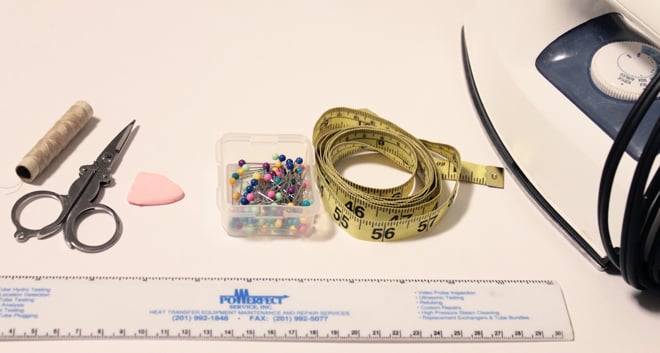
1. If you’re not an experienced sewer, start with an inexpensive blazer that you won’t weep over if you accidentally slice or botch it. Turn the blazer inside out and use a seam ripper or sharp scissors to take apart a few inches of the lining seam (enough for your hand to fit inside comfortably). Make this hole about a few inches above the sleeve opening.

2. If you are only slimming the sleeves, then the side hole made in step 1 is all you need. If you are also shortening the sleeve length or only shortening the sleeve length, then take apart the seams connecting the lining to the outer material.

3. While the blazer is still inside-out, push the sleeve lining up near the shoulders and out of your way.

4. Measure a blazer that fits you well, and mark the one being altered with fabric chalk. Note that sleeves should not be the same width from top to bottom. It should be wider at the armpit opening and taper down by the wrist. I marked the following using a Theory blazer as a guide: 5.5″ across by the armpit, 4.5″ across by the elbow, and 4″ across at the wrist opening.

5. Use a rule or straight edge to draw a fluid line, then pin. I hate using pins and always stab myself, but they serve to keep the two layers of fabric from moving around.

6. SEW in a uniform stitch along the chalked/pinned line. Remove pins before they get near the machine.
7. Trim off the excess leaving about half an inch beyond the stitch, otherwise the extra material could look bulky. If you have a serger, you can use it now to prevent the raw edges from fraying, or do a zig zag stitch on a regular sewing machine.

8. Iron down the freshly trimmed edges from the inside and then also from the outside. Ironing is critical to sewing. If this seam was not ironed down, then it will not look crisp and smooth from the outside.

9. Measure out your ideal sleeve length, trim then fold down the material, and iron to keep it in place.

10. Pull the lining back down and trim off the extra length as well. Leave about an inch of length between lining and the end of the sleeve, fold the lining under, and then iron to keep in place.

11. Now our sleeve and lining are ready to be joined. This was the trickiest step for me. Using one hand, go THROUGH the hole we created in step #1 to carefully pin the edge of the lining and the raw edge of the outer material together. Make sure the pin is not poking through the inner lining NOR the outer material.


12. I have no idea how to clearly describe this next step. Insert your hand again through the hole created in step #1, and pull the raw edges of the outer + lining (should be pinned together) THROUGH the hole.

13. After you pull the entire wrist through the little side hole, it should make a full circle. Sew along the pins.

14. After you’re done sewing around the circumference of the sleeve opening, insert the end of the sleeve back through the side opening, so it’s back to normal. Steps 9-13 are how I joined the lining to the sleeve without any visible stitching from the outside.

15. Now, try on your blazer. Re-do the sleeve width or length if necessary, always ironing it smooth afterwards. Once you are satisfied with the alterations, we can close the little lining hole made in step 1. At this point I was too tired to learn an invisible stitch, so I just used pink thread and stitched the lining shut from the outside.

16. Lastly, (optional) I secured the sleeve length with a light hand stitch using the same colored thread.

All done! Phew! I will show the completed garment soon.
Readers – Do you do your own alterations? If so, please share some tips or links to good tutorials.


I was JUST trying to figure out how to do this to a thrifted Liz Claiborne blazer with huge arms. I was afraid I'd never be able to wear it, but I think I'll try this DIY and add some gold studs at the collar.
Thanks for the inspiration!!
Wow, I can't do it even after reading your instructions. You are amazing. The blazer looks very nice on you.
You are so incredibly talented!! I can't even sew a button nicely.
OMG,you are so talented! I can't believe my eyes. I knew from your previous post that you have taken sew classes in China. Now after seen your amazing DIY, I think I need to learn that too when I go back to China:)Thanks for great post as always.
you're incredibly talented. i adore this DIY tutorial. love what you have done so far with the jacket. =)
Thats awesome! Love how you've explained it step by step!
Well done, Jean! I am so impressed! I might try this sometime soon. Your tutorial is very thorough and helpful.
Great post, Jean!
Since I plan on getting this balzer, I may need to reference this post again in the future. I don't know how comfortable I am trying to do an alteration like this, however.
I do do my own alterations 80% of the time. In the last couple years I have learned how to shorten sleeves, sew hems and take in garments without lining; not sure how I feel about doing lining too. I also do these by hand, I feel more comfortable that way. I have used a sewing machine before but I feel like I make more mistakes with a machine! Is that weird?
I guess it depends on whether or not I would rather have it done for well in exchange for money or "good enough" in exchange for time, because I think I'm okay at it.
WOW….I cannot sew nor can I cook to save my life. You did an amazing job with this jacket! What's next? A dress?? I bet you can do it!
SO funny to see this post as I just ordered two sale blazers for $10 each. I was thrilled until I received the ship notification and realized I had ordered the TALL!!! What! Oh, heck no!! I can sew well enough but this task seems over my head….but now…why not! They were only $10. Thanks for this post
Wow, nice job! My mom does my less complicated alterations for me (I've made peace with the fact that I will never be as good as her in the cooking/sewing department). Also, that white+faux leather H&M; dress is so gorgeous! Must…resist…buying…more…dresses
great job! I always dread tearing apart finished garments unless I created them
You did a good job. I assume you did not keep the vent and button. You are lucky since that jacket has only one button on the cuff. I have a blazer that is just a touch too long in the sleeves but it has 4 buttons on the cuff. The only way to shorten it would be to take off the whole sleeve and shorten from the shoulder. I cheated by folding the excess length under and sewing it down. It's not perfect, but it works.
Wow! I'm too scared to do that. >.< Usually I'll just ask my mom to fix my clothes since I'm petite too. Hehe.
OMG you did such a great job. I can't sew for the life of me but I want to try smaller/ easier projects to get better!
you're crazy Jean but good for you!!
you did a really great job on this! i need to dust my sewing machine too and start hemming my pants!
wonderful, i've been searching the web for diy blazer alterations, i found 2 silk cream blazers from saks 5th avenue for $4 each at goodwill, but they are too bulky. can't wait to try this
…I am in awe of your DIY abilities. I couldn't find the size 4 for this jacket so kept the 2…after further scrutiny I think the shoulders are passable. I am now struggling with the sleeves…I don't want to spend the big bucks to get it slimmed but I don't have your chops. sigh. feeling particularly useless today. 🙁
You, on the other hand, never fail to amaze me. I think you are in the big leagues now with this sleeve slimming + shortening tutorial. This looks pretty difficult!
wow…that's a lot of work and you did great!!
the tricky part would be the arm pit area…do you have any picture of that area how you did it??
This looks great! I mean really really good! I'm no seamstress either but your steps look pretty easy! I might try!!!!!
You are amazing!
Final blazer looks great! That is definitely an industrious sewing project for newbies. I appreciate the tutorial though since I have loads of things I would love to alter myself. I am slightly confused on the bit where you invert the edge of the sleeve through the hole and sew the sleeve to the lining–pretty tricky stuff, and I'm not certain I fully grasp how to to do that. Nevertheless, I think this is a great idea–to add more diy alterations tutorials! Maybe some videos too, for the tricky parts? Thanks Jean!
I have been hooked on your blog for about 2 months and must say this is one of the best posts! I'm a total cheapie in addition to being petite. I buy a lot of stuff thrifted, getting items from Theory, BR, AT and Talbots. But I always need the sleeves shortened and most likely slimmed too, but can't justify the $35 plus to get the work done when the item cost only $4!
My new years resolution is to learn to sew with a machine. I'm getting that and will use your tutorial.
Can you post some guides on proper length of sleeve and pant hems?
Super job! I've been using some of your tips and already feel 100% more put together, even with the clothes I already own.
Great DIY, Jean! I certainly feel more comfortable doing my own alterations now after I’ve experienced with a few simple ones. I even made Courtney a sequin skirt from scratch over the weekend and she loved it..lol =) Thank you for the tutorial. I know it takes time to show step-by-step photos. Looking forward to more DIY tutorials in the future. Do you have any sewing machine recommendations? I’ve been using my Mom’s but wanted to get my own. Have a great day!
I wish I could do my own alterations. I don't have the tools, nor the knowledge. Amazing work, Jean!
you did a great job. you make it seem so easy but i'm sure it won't be that way for me. lol. thanks for the tutorial. 😀
This is great! I have a Marc Jacobs blazer I got secondhand that I really like. The sleeves are huge though! I will save this tutorial for when I get a few days off and want to do a DIY project.
That looks fantastic! Well done.
Wow that is awesome! I am lucky that my grandma does my alterations for me (she worked in the alterations department at Saks in the 60s). I asked her to teach me once but she yelled at me as soon as the needle hit the cloth because I was doing it wrong, and have never tried again. I can't even sew on a button :(.
Hello,
Many thanks for this tutorial and method: I've got so much outfits to alter and the cost with my taylor is getting to high for me (yes my taylor likes me!). Anyway I do not have a sewing machine neither so I welcome your pics and step by step method albeit "amateur" as you say. I will definitely try it on one of my jackets (problem is that I have a lot of velvet fabric winter jackets, sounds easier with lighter fabric like cotton or linen perhaps).
I know that in a previous post you wrote about altering the sleeves and sides of a silk blouse: would you mind and have time to make a tutorial also or explain how you did it? I have several nice silk blouse sleeping in my closet and I long to be able to wear them when they fit. Many thanks again.
Wow! I now have a new found appreciation for why alterations cost what they do. Great tutorial and I hope you do more in the future! Definitely inspired to practice on old clothes now.
You did a great job! I do love DIY posts and hope that this success will mean that you'll do more!
Great job Jean! I do a lot of my own alterations and the only tip I would add is about the cuff – the original had a band of interfacing on the 'hem' portion of the sleeve.. This keeps that edge looking crisp and firm and stops the lining from ever slipping down to be exposed. You might want to buy some iron on interfacing and when you do this again just cut a strip 1 inch wide to iron on before you sew it up. Great job!
Hm, seeing your post and your successful alternation of your blazer really puts me into the mood of altering my old blazer… I have a size small blazer I bought from Forever 21 on sale that's too big/loose on me around the arms.
I think I'm going to alter mine this weekend, plus I can practice some of my stitching skills like invisible stitching! I'm so thankful my high school offered Sewing class! I took two years of that and I can seriously say that class is the most enjoyable class I've taken and the skills will help me throughout my life! Haha I sound so cheesy…
What else can you do girl?? You never cease to amaze. I think I'd like to try this but I'll practice on a jacket on my donation pile. Thank you for the step-by-step.
Jean, you did such a great job! I would never attempt such a daunting task. Your altered sleeve looks great. And pfft – lack of skill? Didn't you make your own prom dress??!
Hope you're having a great week!
xox
Jen
i once bought this cheap $10 large mens versace blazer from a thrift store and thought i'd try to reconstruct it into a cropped women's blazer. totally bit off more than i could chew, and ended up dumping the whole project after hours of frustration. love your photos and step by step explanation. i know this will come in handy for me one day.
Thanks for sharing, Jean! You are quite patient to attempt this with your work schedule. Are you studying for the second CFA exam? I just bought the books for it…GAH, how I will study while working 70 hour weeks+Saturdays, I don't know 🙁
Hey Jean! I just wanted to know what nail polish you're wearing in these pictures. I really like that taupe color 🙂
Wow that is amazing , Jean! Thank you for providing such a detailed tutorial. I'm not sure if I can accomplish that without hurting myself in the process. Haha the altered sleeve makes a world of a difference. I think I need to learn to sew properly. Did you teach yourself how to do that and how long did it take you to get the hang of it?
Holy moly, woman! You are BRAVE! I haven't even attempted a pant hem yet and here you are taking apart blazers. I tip my hat to you.
I just got a sewing machine lately, as a fellow petite, most of my skirts/dresses need altering too, might just start doing it myself instead of sending to a tailor. You did a great job!
Love your tutorial! Thanks for sharing it with us!
http://www.fashionablememories.com
Nice tutorial, I have been following your blog recently and love the stuff! I was wondering if you could do a post about how you wash/dry your clothes! As a lot of my Gap/H&M; clothes always re-size during washing.
Thanks
i think i would definitely be too lazy to do all those alterations..so i'm very impressed to say the least! that blazer is really nice though, i'll definitely have to check it out next time i go to h&m; 🙂
grace
Jean, your are so talented, I admired you! I can hem my pants, but never done it on the blazer sleeves. thanks for sharing
Mary Ann – Just discovered your blog today and am already hooked on your DIY tutorials! Posting them here for others to enjoy: http://www.thedapperbun.com/search/label/diy%20style
Excellent job Jean – you're much handier with the sewing skills that I thought! 😉
Wow, Jean! I am so impressed!
I don't even trust myself to correctly sew on a button. I think this type of simple alterations sewing is a skill that everyone should learn though. Maybe I'll try my hand at it again. And save lots of money in the process.